← Back to Scholarship Resources
Trusted Scholarship Databases in the USA With Verified Listings
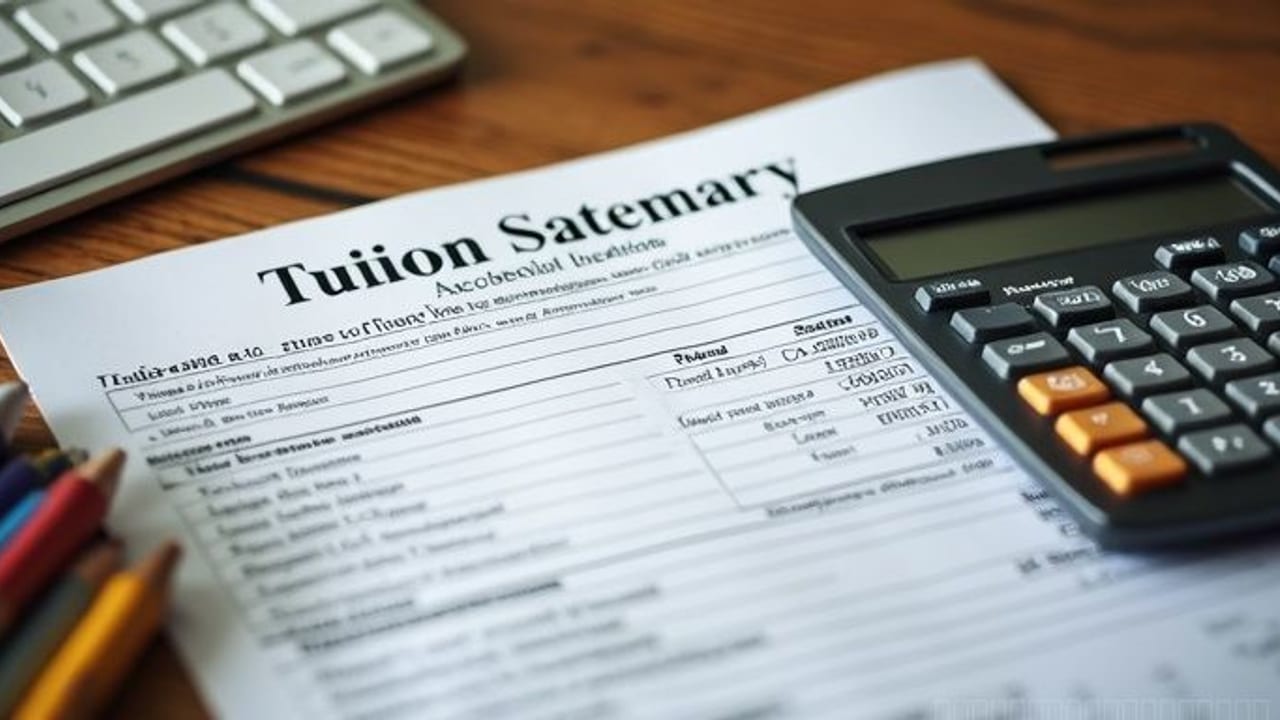
How do you know whether a scholarship database is actually helping you find real money for college, or just sending you into a maze of expired listings, marketing traps, and scam risks?
That question matters because students and families often start with broad online searches, then run into offers that ask for fees, promise guaranteed awards, or hide basic sponsor information. The safest approach is to use trusted scholarship databases in the USA with verified listings, then apply your own screening process before sharing personal details or documents.
A strong scholarship platform does not need to be perfect to be useful. What matters is whether it shows signs of moderation, institutional credibility, transparent listing details, and a clear process for reporting bad or outdated opportunities. Students can also cross-check scholarships with official college financial aid pages, state education resources, and federal student aid information from the official U.S. Federal Student Aid website.
What makes a scholarship database trustworthy?
The best scholarship databases USA students rely on usually share a few common traits. First, they are transparent about who runs the platform. Second, they provide enough detail for each listing to help users verify the sponsor, deadline, eligibility rules, and application method. Third, they do not require payment just to search for awards.
Verified scholarship listings do not always mean every award is guaranteed or manually audited line by line. Instead, the phrase usually points to some combination of moderation, source screening, institutional oversight, or sponsor review. A legitimate platform may remove suspicious entries, flag expired deadlines, and encourage students to apply through official sponsor pages rather than through unclear third-party forms.
When evaluating legitimate scholarship websites, look for these trust signals:
- Clear ownership or organizational identity
- Transparent privacy and contact information
- Scholarship details that include sponsor names and deadlines
- No upfront fee to browse opportunities
- Reasonable data requests during account creation
- A way to report broken, expired, or suspicious listings
- Links to official institutions, colleges, foundations, or recognized organizations
That last point matters especially for students who want scholarship resources in the United States that connect back to real institutions. If a listing claims to be tied to a college, verify it on that school’s official .edu financial aid page.
Trusted platforms students often use in the United States
Students looking for safe scholarship search platforms often start with a mix of national databases, college financial aid pages, and state-level resources. Broad scholarship search engines for students can be helpful for discovery, but institutional sources are often stronger for verification.
Here are the main categories worth using:
1. Official college and university financial aid pages
These are among the most trusted scholarship websites for college students because the information comes directly from the institution. Many schools list merit awards, departmental scholarships, transfer scholarships, and donor-funded opportunities on official .edu pages. If you already have a target college list, this should be one of your first stops.
2. State higher education agencies and public programs
Many states publish grant and scholarship information through official government or education portals. These sources are especially useful for residency-based awards, tuition assistance programs, and public college funding options. Students can also review broader education information through the U.S. Department of Education when learning how aid systems work.
3. Reputable national scholarship search platforms
Some well-known databases aggregate opportunities from many sponsors and may use moderation or screening to reduce scam risk. Their strength is scale and filtering. Their weakness is that listings can still become outdated, so students should always verify details on the sponsor’s official page before applying.
4. Nonprofit, foundation, and association websites
Professional associations, community foundations, and nonprofit organizations often host scholarships directly. These can be highly legitimate scholarship websites because the sponsor is visible and the mission is clear. They are especially useful for field-specific, identity-based, or local awards.
The smartest strategy is not to depend on one source. Use a broad database to discover opportunities, then confirm them through the sponsor, institution, or official page before submitting anything sensitive.
How to find real scholarships without wasting hours
Students often ask how to find real scholarships efficiently. The answer is to search in layers instead of typing random phrases into a search engine and hoping for the best.
Use this process:
- Start with your college list. Check each school’s official scholarship and financial aid pages.
- Add state-based resources for your residence and intended college location.
- Use free scholarship databases to identify national and niche awards.
- Filter by major, degree level, identity group, extracurriculars, and location.
- Verify every promising listing on the sponsor’s official page before applying.
- Track deadlines, required documents, and renewal rules in one spreadsheet.
This method saves time because it reduces duplicate searching. It also improves quality. Instead of chasing hundreds of vague listings, you focus on awards that match your profile and have a visible source.
A good search should include both broad and narrow terms. For example, a biology major in Texas should search not only for general undergraduate scholarships, but also for state awards, STEM scholarships, departmental scholarships, local foundation awards, and transfer or first-generation opportunities if relevant.
A practical checklist for verifying scholarship listings
Even on trusted scholarship databases in the USA with verified listings, students should still do their own checks. Verification is not complicated, but it should be consistent.
Use this checklist before you apply:
- Is the sponsor clearly named?
- Does the listing show a real deadline and eligibility criteria?
- Can you find the same scholarship on an official sponsor, school, or foundation website?
- Does the application ask for reasonable information for the stage you are in?
- Is there a physical address, organization profile, or contact email tied to a real institution?
- Are the essay prompt, award amount, and selection process explained?
- Does the listing avoid unrealistic promises like “guaranteed winner” or “everyone qualifies”?
- Are there signs the scholarship has existed across multiple years?
For institutional verification, it helps to understand how accredited colleges present aid information. Students can review accreditation basics through the overview of higher education accreditation in the United States and then confirm details on official college websites.
If a scholarship looks real but the listing is incomplete, do not guess. Search for the sponsor directly, check whether the organization has a credible web presence, and confirm that the application destination matches the sponsor’s official domain.
Mistakes students make when using scholarship search engines
One common mistake is trusting the database more than the listing. A platform may be reputable overall, but that does not remove the need to verify each opportunity. Students sometimes assume that if a scholarship appears on a known site, it must be current and fully vetted. That is not always true.
Another mistake is ignoring small local awards. Many applicants chase large national scholarships while overlooking community foundations, local nonprofits, school district awards, and employer-sponsored programs. Smaller awards may have fewer applicants and can stack together.
Students also lose opportunities by applying too late, skipping eligibility details, or using the same generic essay for every award. A scholarship database helps you find options, but winning still depends on fit, timing, and application quality.
Finally, some families share too much personal information too early. A legitimate scholarship may eventually require transcripts, tax details, or identity documents, but a listing should not demand sensitive data before basic eligibility and sponsor legitimacy are clear. This is especially important when uploading documents online.
Warning signs that may point to scholarship scams
Knowing how to avoid scholarship scams is just as important as knowing where to search. Scam listings often imitate real opportunities by using urgent language, patriotic branding, or vague references to education support.
Watch for these red flags:
- You must pay a fee to access or claim the scholarship
- The listing guarantees you will win
- The sponsor name is missing or hard to verify
- The application asks for bank details too early
- The email contact uses an unrelated or suspicious domain
- The deadline keeps changing without explanation
- The award description is vague and full of hype
- The site pushes you to act immediately without reading terms
A real scholarship can have a short deadline or a simple application. That alone is not suspicious. The problem is when multiple warning signs appear together, especially payment requests, identity pressure, or missing sponsor information.
If something feels off, pause and verify. Students who want a deeper look at payment-related red flags should also review internal resources on spotting fake scholarship payment requests and document safety before submitting sensitive files.
A smart weekly strategy for using scholarship databases
The best results usually come from routine, not random searching. Scholarship opportunities change often, and new listings appear throughout the year. That is why students should build a repeatable system instead of doing one big search and stopping.
Here is a simple strategy breakdown:
- Set up your core profile once. List your GPA, major, state, activities, identity-based eligibility, work experience, and intended degree level.
- Check databases weekly. A 20- to 30-minute session each week is more effective than occasional marathon searching.
- Prioritize by fit. Rank scholarships as high-fit, medium-fit, or low-fit based on eligibility and effort.
- Verify before drafting. Confirm sponsor legitimacy before spending time on essays.
- Batch your materials. Keep a current resume, transcript copy, recommendation request template, and reusable essay themes.
- Track outcomes. Note where you found each scholarship, when you applied, and whether the listing source was reliable.
This approach helps students compare safe scholarship search platforms over time. You will quickly notice which databases produce relevant, current, and legitimate scholarship websites for your profile, and which ones mostly generate noise.
How to compare platforms by strengths and limitations
No scholarship database does everything well. Some are better for broad discovery, while others are stronger for institutional credibility or niche targeting. Students should compare platforms based on purpose, not popularity alone.
A broad national database may be useful if you need volume and filters. Its limitation is that some listings may be duplicated, outdated, or thin on sponsor detail. A college financial aid page offers stronger verification but covers only one institution. A state portal may be excellent for residency-based funding but less useful for private national awards.
When comparing best scholarship databases USA students use, ask:
- Does the platform show who sponsors each award?
- Are deadlines updated regularly?
- Can you filter by major, state, and degree level?
- Does it link to the official application source?
- Is the site free to use?
- Does it appear designed to help students, or mainly to collect leads?
The strongest scholarship search plan combines all three: official school pages, state or public resources, and carefully selected free scholarship databases.
Questions students ask most
FAQ
What are the most trusted scholarship databases in the USA?
The most trusted options usually include official college financial aid pages, state education or higher education portals, and reputable national scholarship search platforms with visible moderation and sponsor details. Institutional and government sources are often the easiest to verify because they connect directly to real schools or public programs.
How can students verify whether a scholarship listing is legitimate?
Start by checking whether the sponsor is clearly named and whether the same scholarship appears on an official sponsor, .edu, or .gov page. Then review the deadline, eligibility rules, contact details, and application destination to make sure they are consistent and professional.
Are free scholarship databases reliable for finding real awards?
Yes, many free scholarship databases are useful for discovery, especially when they provide filters and clear sponsor information. Still, students should treat them as search tools rather than final proof and verify each listing before applying.
What warning signs suggest a scholarship listing may be a scam?
Major red flags include upfront fees, guaranteed winnings, vague sponsor information, pressure to act immediately, and requests for bank or identity details too early. If the listing cannot be traced to a real organization, it should not be trusted.
How often should students check scholarship databases for new listings?
Weekly is a practical rhythm for most students. Regular short sessions help you catch new deadlines, keep your list current, and avoid the stress of last-minute applications.
📌 Quick Summary
- Key Point 1: This guide breaks down the core strategy for Trusted Scholarship Databases in the USA With Verified Listings.
- Key Point 2: Looking for real scholarships without wasting time on suspicious offers? This practical guide explains how to use trusted scholarship databases in the USA with verified listings, compare reputable platforms, check legitimacy, and avoid common scam warning signs.
- Key Point 3: Explore trusted scholarship databases in the USA with verified listings. Learn where students can search safely, compare platforms, and avoid scholarship scams.
Continue Reading
- How to Apply for Scholarships — practical steps to organize your application process and avoid rookie mistakes
- Scholarship Deadlines Explained — simple ways to track deadlines and avoid missing key dates
- Can You Combine Multiple Scholarships? — understand how stacking scholarships works and which rules to watch
Related Scholarships
Real opportunities from our catalog, matched to this article.
Browse the full scholarship catalog — filter by deadline, category, and more.
Open scholarship details LearnerNEWLearner Online Learning Innovator Scholarship for Veterans
Learner offers this scholarship to help cover education costs. The listed award is $500. Plan to apply by March 3, 2027.
307 applicants
$500
Award Amount
Direct to student
Mar 3, 2027
320 days left
4 requirements
Requirements
Mar 3, 2027
320 days left
4 requirements
Requirements
$500
Award Amount
Direct to student
EducationSTEMLawDisabilityVeteransHigh School SeniorHigh SchoolUndergraduateGraduateDirect to studentGPA 3.5+FLMANYNCOpen scholarship details Jacqueline BretellNEWChristopher K. Swartz Scholarship
Jacqueline Bretell offers this scholarship to help cover education costs. The listed award is $5000. Plan to apply by June 8, 2026.
332 applicants
$5,000
Award Amount
Jun 8, 2026
52 days left
2 requirements
Requirements
Jun 8, 2026
52 days left
2 requirements
Requirements
$5,000
Award Amount
ArtsEducationHumanitiesSTEMCommunityFew RequirementsFinancial NeedHigh School SeniorHigh SchoolUndergraduateGraduateGPA 3.5+INPAWAOpen scholarship details wiseGEEKNEWFuture Green Leaders Scholarship
wiseGEEK offers this scholarship to help cover education costs. The listed award is $1000. Plan to apply by June 17, 2026.
2,133 applicants
$1,000
Award Amount
Jun 17, 2026
61 days left
3 requirements
Requirements
Jun 17, 2026
61 days left
3 requirements
Requirements
$1,000
Award Amount
EducationSTEMLawHigh School SeniorHigh SchoolUndergraduateGraduateGPA 3.5+GA