← Back to Scholarship Resources
Scholarships in the USA for Students From Low-Income Urban Neighborhoods
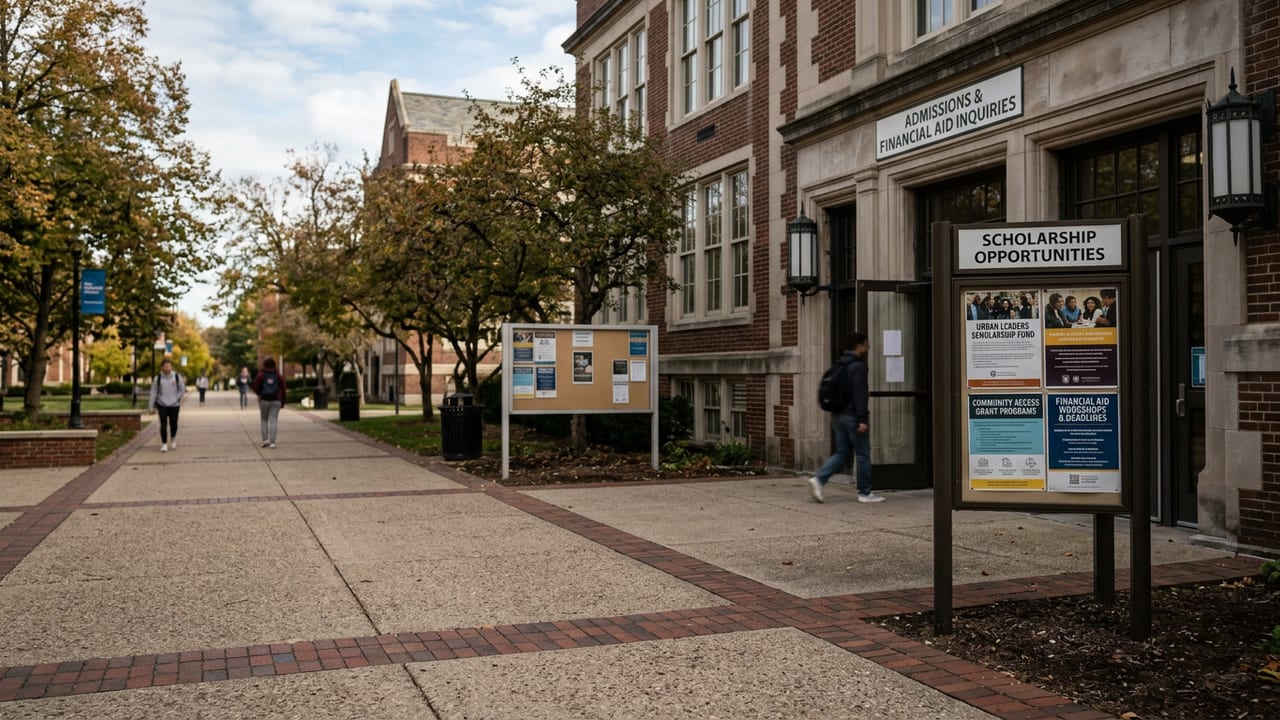
What if the best college funding options for a student from a low-income city neighborhood are not labeled “urban scholarships” at all? That is often the reality. Many of the strongest opportunities are broader programs for low-income students, first-generation students, public school students, underrepresented communities, and applicants with academic, leadership, or service records.
That matters because students can miss real money if they search too narrowly. A high school senior from a public school in Detroit, Chicago, Baltimore, Los Angeles, or Atlanta may qualify for federal grants, state aid, college-funded need-based aid, local foundation awards, and scholarships tied to identity, major, leadership, or neighborhood-based nonprofit support. The key is knowing how these categories compare and how to combine them.
The most important starting point is need-based financial aid. The federal government explains basic aid types through the official Federal Student Aid website, and students should review the FAFSA process early. For students aiming at public or private colleges, institutional aid policies on official .edu websites can be just as important as outside scholarships.
Why “urban student scholarships” are often broader than the label suggests
Very few legitimate programs say they are only for students from low-income urban neighborhoods. More often, the eligibility language uses terms like low-income, first-generation, underserved, underrepresented, public high school, disadvantaged background, or community-based residency. That means students from city neighborhoods should read criteria carefully instead of assuming they do not qualify.
This broader view is good news. It expands the pool of scholarships in the USA for students from low income urban neighborhoods beyond one narrow category. A student may match multiple pathways at once: family income need, attendance at a public high school, first-generation college status, racial or ethnic background, strong GPA, volunteer service, intended major, or residence in a particular county or city.
Another important point: scholarships are only one part of the funding picture. Grants, tuition waivers, and institutional need-based awards can reduce costs more than a small outside scholarship. The U.S. Department of Education and state agencies often shape the biggest part of an aid package, while local or nonprofit scholarships help close the remaining gap.
Comparing the main funding categories that matter most
Students looking for scholarships for low income students USA should compare opportunities by source, not just by award name. The largest categories usually include:
- Federal grants and aid programs
- State grants and tuition assistance
- College and university need-based aid
- Community foundation and local scholarships
- Nonprofit-funded scholarships and college access programs
- Identity-based, first-generation, and public-school-focused scholarships
- Merit scholarships that also consider financial need
Federal aid is the foundation for most low-income applicants. Pell Grants are not scholarships in the traditional sense, but they function similarly because they do not usually need to be repaid. State aid can also be substantial, especially for students attending in-state public colleges. These two categories often matter more than chasing dozens of small national awards.
College-based aid is the next category to compare closely. Some colleges meet a high percentage of demonstrated need, while others offer limited support. On an official university financial aid page, look for terms such as “meets full demonstrated need,” “need-based institutional grants,” and “first-generation support programs.” Public flagship universities, regional public colleges, and selective private institutions can all differ dramatically.
Federal and state aid versus private scholarships: what is usually better?
For many families, grants and scholarships for low income students work best when layered together. Federal and state aid tends to be more predictable, larger, and tied directly to family finances. Private scholarships may be more competitive, but they can fill gaps for books, transportation, housing, or remaining tuition.
The FAFSA should come first for almost every domestic student. The form determines eligibility for federal grants, loans, and many state and institutional awards. Students can learn more from the U.S. Department of Education, and many states also run grant programs tied to residency and income. If a college requires the CSS Profile or its own financial aid forms, complete those by the college deadline as well.
Private scholarships have strengths too. They may reward leadership, perseverance, community service, academic growth, artistic talent, or intended major. For students from disadvantaged backgrounds, private awards can be especially useful when the college’s own package leaves unmet need.
Quick comparison
- Federal and state aid: Usually the first priority, often need-based, larger impact, deadline-sensitive
- College aid: Can be generous, especially at schools with strong need-based policies, but varies by institution
- Private scholarships: Helpful for gap funding, but more fragmented and often more competitive
- Community and nonprofit awards: Sometimes smaller, but often easier to match and less nationally competitive
Best-fit scholarship pathways for students from underserved city communities
Students seeking college scholarships for underserved communities should focus on pathways where their background naturally aligns with the stated mission. That does not mean every award will mention “urban” directly. It means the student profile often fits the underlying purpose.
One strong pathway is first-generation funding. Scholarships for first-generation college students are widely offered by universities, nonprofits, and local groups. If neither parent earned a four-year degree, that may open doors to support programs that include mentoring, retention support, or emergency aid in addition to scholarship money.
Another major pathway is identity-based and underrepresented student funding. Scholarships for minority students in urban areas may exist through cultural organizations, professional associations, civil rights nonprofits, and university diversity initiatives. The eligibility language may refer to Black, Latino, Native, Asian American, immigrant, refugee, or other specific communities, but students should only apply when they clearly meet the official criteria.
Public school students in cities should also target awards tied to school system partnerships, city-based community foundations, and neighborhood nonprofits. Scholarships for public school students in cities may be offered through local education funds, alumni groups, or region-specific foundations. These are often overlooked because students spend too much time on broad internet searches and not enough time checking school counselors, local libraries, and community organizations.
How to build a smart application plan that matches your profile
Students from low-income neighborhoods usually need a system, not random searching. A strong plan improves the odds of finding financial aid for students from disadvantaged backgrounds without wasting time on weak-fit opportunities.
Here is a practical process:
- Start with your non-negotiables. List family income status, state residency, high school type, GPA range, first-generation status, race or ethnicity if relevant, intended major, and extracurricular strengths. These are your core filters.
- File aid forms early. Complete the FAFSA and any required state or college forms as soon as possible. Delays can reduce access to limited funds.
- Sort scholarships into three groups. Put options into “high match,” “possible match,” and “long shot.” Spend most of your time on high-match awards.
- Target your colleges strategically. Compare schools by net price, not sticker price. Some colleges with higher listed tuition offer better need-based aid than lower-cost schools. The U.S. Department of Education’s Net Price Calculator Center can help families compare likely costs.
- Prepare a reusable application set. Keep a current résumé, unofficial transcript, family financial notes, activity list, and a polished personal statement draft.
- Ask for recommendations early. Teachers, counselors, employers, coaches, or nonprofit mentors can write stronger letters when they have time.
- Track deadlines in one place. A spreadsheet or calendar should include due dates, required documents, essay prompts, and submission status.
Students who follow this method usually submit fewer but stronger applications. That matters because quality often beats quantity, especially for scholarships for high school seniors from low income families.
Pros and cons of each scholarship route
Different funding paths serve different needs. Comparing their strengths and drawbacks helps students decide where to focus first.
Federal and state aid
Pros: Usually the best starting point, can lead to large awards, tied to financial need, and accepted by many institutions.
Cons: Strict deadlines, annual renewal requirements, and eligibility can shift if income or enrollment changes.
College and university aid
Pros: Can cover a major share of tuition, sometimes renewable for four years, often bundled with advising and support services.
Cons: Highly dependent on the college’s aid budget and policies; two schools may offer very different packages to the same student.
Community foundation and local scholarships
Pros: Often easier to match, smaller applicant pools, strong fit for local public school students, and may value community involvement.
Cons: Award amounts may be smaller, and opportunities can be scattered across local organizations.
Nonprofit and mission-driven scholarships
Pros: Good fit for students with leadership, activism, service, or underrepresented backgrounds; may include mentoring and career support.
Cons: Some are competitive and require essays, interviews, or ongoing program participation.
Merit-plus-need scholarships
Pros: Useful for students who have strong grades or achievements but still need financial help.
Cons: Students with weaker academic records may not qualify, even when need is high.
What documents and proof are usually required
Many students lose scholarship opportunities because they wait too long to gather paperwork. For need-based scholarships in the USA, the most common documents are easier to manage when organized early.
Typical requirements include:
- FAFSA submission confirmation or Student Aid Index information
- Recent transcript
- Proof of enrollment or admission
- Recommendation letters
- Personal essay or short responses
- Résumé or activity list
- Family income documentation in some cases
- Proof of residency, citizenship, or eligible immigration status when required
For institutional aid, colleges may request extra verification documents. For private awards, the organization may ask for a short explanation of financial hardship, obstacles overcome, or community impact. Students should never send sensitive financial or identity documents unless the scholarship source is verified through an official school, nonprofit, government, or foundation website.
If you are unsure whether a program is legitimate, compare the requirements against trusted signals and use official sources. A helpful next step is reviewing internal advice on scholarship verification before submitting private information.
Common mistakes that cost students real money
One of the biggest mistakes is assuming a scholarship does not apply because it does not use the phrase “urban student.” Students from underserved city communities often qualify for broader awards tied to need, school type, first-generation status, major, or identity.
Another mistake is focusing only on national scholarships. Local awards may be smaller, but they can be less competitive and easier to win. A $1,000 local scholarship plus a state grant plus a college grant can matter more than spending months chasing one famous national award.
Students also hurt their chances when they reuse the same essay without tailoring it. A strong application connects the student’s background to the scholarship mission. That is especially true for scholarships for first-generation college students and service-oriented nonprofit awards.
Finally, do not ignore deadlines and renewal rules. Some scholarships are one-time awards; others require a minimum GPA, full-time enrollment, or annual financial aid renewal. For deadline planning, students should understand timing clearly and avoid last-minute applications.
Questions students should ask before choosing where to apply
Comparing scholarship pathways is not just about eligibility. It is about return on effort. A student should ask: Is this award renewable? Does it reduce loans or replace existing college grants? Is it restricted to tuition only? Are there service, essay, interview, or residency requirements?
Students comparing college offers should also read aid letters carefully. Some schools package loans alongside grants and scholarships, which can make one offer look stronger than it really is. Official college financial aid pages on .edu domains often explain how outside scholarships affect institutional aid, and the federal aid types overview helps families understand the difference between grants, loans, and work-study.
For students balancing multiple awards, stacking rules matter. Some scholarships can be combined freely, while others may reduce unmet need calculations or institutional grants. Asking this question early can help families make smarter enrollment choices.
FAQ: common questions from low-income urban students and families
What scholarships in the USA are available for students from low-income urban neighborhoods?
The strongest options are often not labeled specifically for urban neighborhoods. Students should look at federal and state aid, college need-based grants, first-generation scholarships, local foundation awards, public-school-related scholarships, and nonprofit programs for underserved or underrepresented communities.
How can low-income urban students find legitimate college scholarships?
Start with official sources: school counseling offices, college financial aid pages, local community foundations, state agencies, and nonprofit organizations with clear contact information. Avoid offers that ask for upfront fees or promise guaranteed awards without an application review.
Are there scholarships for first-generation students from underserved city communities?
Yes. Many colleges and nonprofits offer scholarships and support programs for first-generation students, even if they do not mention city neighborhoods directly. If you are the first in your family to pursue a four-year degree, check both institutional aid pages and community-based programs.
Can students from public high schools in urban areas qualify for need-based scholarships?
Absolutely. Students from public high schools in cities often qualify for broader need-based aid, local scholarships, and school-partner awards. Eligibility usually depends on income, residency, academics, and school attendance rather than the word “urban” alone.
What documents are usually required to apply for scholarships for low-income students in the USA?
Most applications ask for a transcript, FAFSA-related information, essays, recommendations, and proof of admission or enrollment. Some programs may also request family income documentation, residency proof, or evidence of first-generation status.
📌 Quick Summary
- Key Point 1: The best scholarships for students from low-income urban neighborhoods are often broader need-based, first-generation, public-school, or underrepresented student programs.
- Key Point 2: Federal aid, state grants, and college-based need aid usually deserve priority before smaller private scholarships because they can reduce costs more significantly.
- Key Point 3: Local foundations, nonprofits, and city-connected community awards are often overlooked and may offer better odds than national competitions.
- Key Point 4: A smart strategy means filing aid forms early, organizing documents, targeting high-match opportunities, and checking renewal and stacking rules.
📌 Quick Summary
- Key Point 1: This guide breaks down the core strategy for Scholarships in the USA for Students From Low-Income Urban Neighborhoods.
- Key Point 2: Students from low-income urban neighborhoods often qualify for more college funding than they realize. This practical comparison explains how federal aid, state grants, college-based aid, community scholarships, first-generation awards, and nonprofit programs can work together.
- Key Point 3: Explore legitimate scholarships in the USA for students from low-income urban neighborhoods, including need-based, merit-based, first-generation, and community-focused funding options.
Continue Reading
- How to Apply for Scholarships — practical steps to organize your application process and avoid rookie mistakes
- Scholarship Deadlines Explained — simple ways to track deadlines and avoid missing key dates
- Can You Combine Multiple Scholarships? — understand how stacking scholarships works and which rules to watch
Related Scholarships
Real opportunities from our catalog, matched to this article.
Relevant to this article
RADM Helena O. Mishoe Diversity "Believe" Scholarship
$1,0002026-04-16View scholarship →Good fit for this topic
A & J Duct Cleaning Scholarship
$2,0002026-06-15View scholarship →Related scholarship
NEORSD Richard N. Connelly Memorial Scholarship
$1,3752026-05-31View scholarship →Relevant to this article
USA Softball of Texas Scholarship
$1,5002026-05-01View scholarship →Good fit for this topic
Support Creativity Undergraduate Scholarship
$1,0002026-04-30View scholarship →Related scholarship
Alaska Education Grant
$4,0002026-06-30View scholarship →