← Back to Scholarship Resources
Scholarships in the USA for College Students With Research Assistant Experience
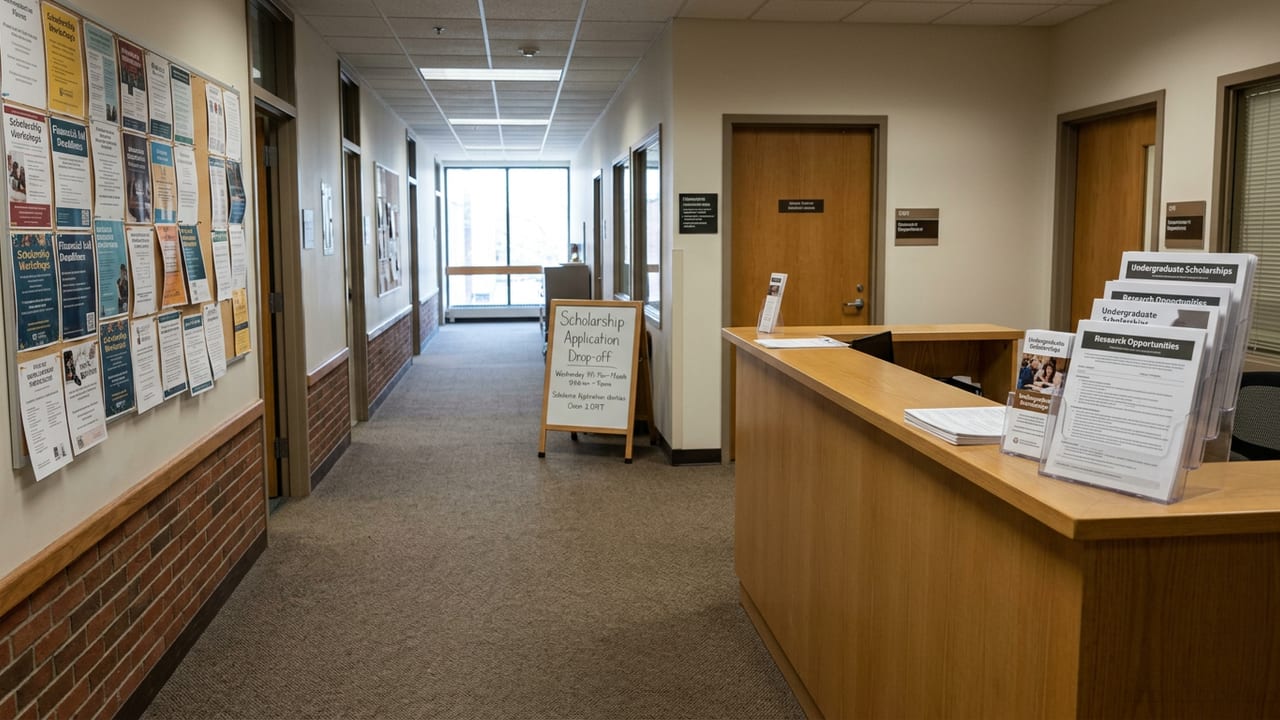
Federal data continues to show that many undergraduates rely on a mix of grants, scholarships, work, and loans to pay for college, which is why every credible advantage in an application matters. For students who have worked in a lab, supported a faculty project, analyzed data, managed participant recruitment, or helped prepare posters and reports, research assistant experience can be a real edge. It may not lead to a scholarship labeled strictly for “research assistants,” but it can strengthen applications across merit, STEM, transfer, and university-linked funding.
That matters because scholarship committees often look for evidence of initiative, academic maturity, persistence, and contribution beyond the classroom. Research work demonstrates all four. If you have experience with literature reviews, data cleaning, bench work, coding, field research, survey administration, or conference presentations, you already have material that can support a stronger case for funding.
Students should also understand the broader aid landscape. Official federal information on grants, loans, and student aid is available through the U.S. federal student aid website, while institutional research opportunities are often described on official university pages such as undergraduate research offices hosted on .edu domains. Research experience fits best when it is presented as evidence of impact, not just as a job title.
Why research assistant experience matters in scholarship reviews
Scholarship committees do not usually reward research experience just because it sounds impressive. They reward what that experience signals. A student who has stayed committed to a faculty-led project for a semester or longer shows reliability. A student who can explain a research question, method, and result shows intellectual engagement. A student who contributed to a poster, abstract, dataset, or lab process shows applied skill.
This is especially important for research scholarships for college students in the USA and for broader merit programs that want proof of academic promise. Even when a scholarship is need-based, committees may still consider how a student has used available opportunities. Research experience can help show resilience, campus involvement, and future academic direction.
Strong applications usually connect research work to one of these themes:
- Academic excellence and curiosity
- Leadership and initiative in a department or lab
- Career preparation in STEM, health, social science, or humanities fields
- Service to a community through applied or public-interest research
- Readiness for graduate study, honors work, or advanced coursework
The best framing is specific. “Worked in a biology lab” is weak. “Supported a microbiology project by preparing samples, maintaining lab logs, and helping analyze trial data used in a campus poster presentation” is much stronger.
Scholarship categories most likely to value undergraduate research
Students searching for scholarships in the USA for college students with research assistant experience should focus on categories, not a mythical single bucket of awards. Real opportunities usually fall into overlapping groups.
First are merit scholarships for students involved in research. These may come from colleges, departments, honors programs, foundations, or discipline-based organizations. Research experience helps because it proves achievement beyond GPA alone. A committee may see a 3.5 GPA differently when it is paired with sustained faculty research, technical skills, and conference activity.
Second are STEM scholarships with research experience as a plus factor. In engineering, chemistry, computer science, physics, biology, public health, and related fields, hands-on project work often carries weight. Students applying for USA scholarships for undergraduate research students should highlight lab techniques, coding tools, instrumentation, publications, and problem-solving responsibilities.
Third are need-based scholarships for college students in the USA that use holistic review. These awards may not require research experience, but they can still favor applicants who have made exceptional academic contributions despite financial barriers. If you balanced classes, work, and research responsibilities, that context can be compelling.
Fourth are university scholarships for undergraduate researchers. Many colleges offer internal grants, endowed scholarships, honors funding, or departmental awards for students engaged in research. These are often less visible than national programs, but they may be more realistic because the pool is narrower and faculty know how to evaluate your work.
Fifth are scholarships for transfer students with research background. Community college students who joined faculty projects, summer research, or independent studies can use that background to stand out after transfer. Universities often want transfer students who will contribute immediately to research, honors, or capstone work.
Where students should realistically look first
National scholarship databases can be useful for broad searching, but students with research backgrounds often get better results by starting closer to campus. That means checking your university scholarship portal, department pages, honors college announcements, undergraduate research office listings, and financial aid office updates.
Official college and university sites often describe internal undergraduate research funding and related awards. Many institutions maintain .edu pages listing summer stipends, poster grants, conference travel support, and scholarships tied to academic performance and faculty mentorship. If your school has an office of undergraduate research, start there. You can also review your financial aid options through official information from the U.S. Department of Education to understand how scholarships may fit alongside grants and other aid.
A practical search path looks like this:
- Check your college scholarship portal for merit, departmental, and continuing student awards.
- Search your major’s department page for scholarships, research grants, and annual awards.
- Review honors college or scholars program funding if you participate in academic enrichment programs.
- Ask your faculty mentor whether your department has donor-funded scholarships for active researchers.
- Look at professional associations in your field for discipline-specific student awards.
- If you are transferring, review both current-school and destination-school scholarships before admission deadlines close.
Students often miss opportunities because they search only for large national awards. In reality, smaller campus-based scholarships can stack and may have better odds.
How to present research experience so it actually helps
Many applicants undersell their research background by listing duties without outcomes. Scholarship readers want to know what you did, why it mattered, and what skills you developed. Your application materials should translate research into plain language without losing credibility.
Use a simple structure: project, role, contribution, result. For example: “Assisted a psychology faculty project on student stress by recruiting participants, organizing survey data in SPSS, and helping prepare findings for a regional conference poster.” That tells the committee more than simply saying “Research assistant in psychology lab.”
Here are the strongest details to include when relevant:
- Project title or subject area
- Faculty mentor name and department
- Dates or duration of involvement
- Methods used, such as coding, lab prep, field interviews, archival review, or data analysis
- Tangible outputs, such as posters, abstracts, publications, presentations, or reports
- Impact, such as contribution to a larger study, campus initiative, or community issue
Letters of recommendation matter a lot here. A faculty mentor can verify that your work went beyond basic clerical tasks. The most useful letter explains your reliability, analytical ability, independence, and role in the project. If a scholarship asks for proof, possible documents include a supervisor letter, conference program listing, poster PDF, lab appointment email, or departmental acknowledgement.
For students in STEM, official agencies such as the National Science Foundation also help define what undergraduate research opportunities and pathways can look like, even when the scholarship itself comes from another source. That context can help you target the right programs and understand what reviewers may value.
Merit, need-based, STEM, and transfer angles compared
Not every scholarship values research in the same way, so students should tailor their application strategy. The same experience can be described differently depending on the award type.
For merit scholarships, the emphasis should be excellence and distinction. Show how your research involvement separates you from other high-performing students. Mention selective participation, advanced methods, poster sessions, publication credits, or unusual responsibility for an undergraduate.
For need-based scholarships, connect research to persistence and access. Did you commit time to a faculty project while working part-time? Did you seek unpaid or low-paid research opportunities to build academic momentum despite financial pressure? That story can be powerful when handled honestly.
For STEM scholarships with research experience, focus on technical preparation. Mention instruments, software, protocols, coding languages, or experimental design. These details help scholarship reviewers see that you are already building professional-level habits.
For scholarships for students with research experience who are transferring, stress continuity. A transfer committee may want to know whether you will continue in honors, research, or lab-based work at the next institution. Show that your prior experience is not random but part of a larger academic plan.
Common mistakes that weaken strong candidates
A surprising number of excellent students lose scholarship opportunities because they frame research too vaguely or assume committees will “get it.” They may have excellent experience but weak presentation.
The most common mistakes include:
- Using unexplained jargon that non-specialist reviewers cannot understand
- Listing tasks without showing outcomes or learning
- Failing to mention posters, abstracts, or publications
- Submitting a generic essay that never connects research to the scholarship’s purpose
- Asking a recommender who knows your grades but not your research work
- Ignoring smaller departmental or university scholarships for undergraduate researchers
- Missing deadlines because internal campus awards open earlier than expected
Another common problem is overstating a role. Be accurate. If you assisted data collection, say that. If you co-authored a poster, say that. Scholarship committees appreciate precision and can usually tell when a student is exaggerating.
A step-by-step application strategy for students with research backgrounds
Students who want to turn research experience into stronger scholarship outcomes should take a more organized approach than simply applying at random.
- Make a research evidence file. Gather your project summaries, posters, abstracts, publications, faculty emails, presentation programs, and lab appointment records. Having these in one folder saves time and improves accuracy.
- Write a one-paragraph research summary. Explain what the project studied, what your role was, what skills you used, and what outcome resulted. This becomes the foundation for essays and activity descriptions.
- Sort scholarships by angle. Label each target as merit, need-based, STEM, transfer, departmental, or university-specific. Then adjust your essay emphasis to match that category.
- Choose the right recommender. A professor or lab supervisor who can describe your research habits is often more effective than a general instructor with a famous title.
- Quantify where possible. Mention semesters involved, number of participants recruited, tools used, poster presentations delivered, or datasets managed. Concrete details improve credibility.
- Translate technical work into value. Explain how your research improved your discipline knowledge, prepared you for a career, or served a broader goal such as health, education, environment, or public policy.
- Apply early and widely within reason. Include internal campus awards, department scholarships, donor-funded funds, transfer scholarships, and discipline-specific opportunities.
This process is especially useful for college scholarships for research assistants because it helps you turn a scattered set of experiences into a consistent story.
What different students should emphasize
A biology student who spent a year in a lab should emphasize bench skills, continuity, and scientific communication. A psychology student should highlight participant-facing responsibilities, ethics training, data handling, and poster preparation. A history or humanities student can showcase archival research, source analysis, transcription, and faculty collaboration. Research is not limited to labs, and scholarship committees at universities often know that.
First-generation and low-income students may want to show how they found and pursued research despite limited access or time. That can support need-based scholarships for college students in the USA and holistic campus awards. Transfer students should show momentum and readiness to contribute at a four-year institution from day one.
If you have no publication, do not worry. Publications are helpful but not required. Many undergraduates strengthen scholarship applications through sustained responsibility, careful work, a strong mentor recommendation, and clear reflection on what they learned.
Questions students ask most often
Can research assistant experience help you win scholarships in the USA?
Yes. It can strengthen both merit and holistic applications by showing academic initiative, specialized skills, and commitment outside the classroom. It works best when you explain your role, outcomes, and what the experience says about your potential.
What scholarships in the USA value undergraduate research experience?
Merit scholarships, STEM scholarships, departmental awards, honors scholarships, transfer scholarships, and university scholarships for undergraduate researchers are the most likely to value it. Need-based scholarships may also consider research as part of a broader record of persistence and achievement.
Are there STEM scholarships for college students with lab or research assistant experience?
Yes, many STEM-focused awards and university programs value hands-on research because it demonstrates technical preparation. Students should highlight methods, software, instruments, problem-solving tasks, and any presentations or posters.
Do need-based scholarships consider research assistant experience?
Often they do in holistic review, even if financial need remains the main factor. Research experience can help show how you used campus opportunities, stayed engaged academically, and built toward long-term goals despite financial constraints.
How should students include research assistant experience in a scholarship application?
Use specific and plain language. Name the project area, explain your responsibilities, mention results such as posters or reports, and connect the experience to the scholarship’s mission, your major, and your future plans.
📌 Quick Summary
- Key Point 1: This guide breaks down the core strategy for Scholarships in the USA for College Students With Research Assistant Experience.
- Key Point 2: Research assistant experience can make a scholarship application much stronger, especially for students applying for merit, STEM, transfer, and university-based awards. This guide explains which scholarship categories in the USA are most likely to value undergraduate research and how to present your lab work, posters, publications, and faculty recommendations effectively.
- Key Point 3: Find real scholarships in the USA that may suit college students with research assistant experience, including merit, need-based, STEM, and university-linked funding options.
Continue Reading
- How to Apply for Scholarships — practical steps to organize your application process and avoid rookie mistakes
- Scholarship Deadlines Explained — simple ways to track deadlines and avoid missing key dates
- Can You Combine Multiple Scholarships? — understand how stacking scholarships works and which rules to watch
Related Scholarships
Real opportunities from our catalog, matched to this article.
Browse the full scholarship catalog — filter by deadline, category, and more.
Open scholarship details The College of the Florida KeysNEWCaptain Jorge Rodrίguez Marine Scholarship
The College of the Florida Keys offers this scholarship to help cover education costs. It is geared toward students attending The College of the Florida Keys. The listed award is $500. Plan to apply by June 1, 2026.
$500
Award Amount
Jun 1, 2026
44 days left
7 requirements
Requirements
Jun 1, 2026
44 days left
7 requirements
Requirements
$500
Award Amount
STEMNo EssayFew RequirementsFinancial NeedUndergraduateGraduateCommunity CollegeGPA 2.0+FLFloridaOpen scholarship details Society of American Military Engineers-Virginia Peninsula PostNEWVirginia Peninsula Post SAME Scholarship
Society of American Military Engineers-Virginia Peninsula Post offers this scholarship to help cover education costs. It is geared toward students attending Society of American Military Engineers-Virginia Peninsula Post. The listed award is $5,000. Plan to apply by April 22, 2026.
$5,000
Award Amount
Apr 22, 2026
4 days left
3 requirements
Requirements
Apr 22, 2026
4 days left
3 requirements
Requirements
$5,000
Award Amount
STEMNo EssayFew RequirementsVeteransFinancial NeedHigh School SeniorHigh SchoolUndergraduateGraduateGPA 2.0+VAVirginiaOpen scholarship details Florida Federation of Garden ClubsNEWFFGC College Scholarship
Florida Federation of Garden Clubs offers this scholarship to help cover education costs. It is geared toward students attending Florida Federation of Garden Clubs. The listed award is $3,000. Plan to apply by May 1, 2026.
$3,000
Award Amount
May 1, 2026
13 days left
10 requirements
Requirements
May 1, 2026
13 days left
10 requirements
Requirements
$3,000
Award Amount
STEMCommunityBiologyNo EssayFew RequirementsFinancial NeedHigh School SeniorHigh SchoolUndergraduateGraduateGPA 3.0+FLFlorida